Key Takeaways
A thoughtful photo timeline planning process gives us room to make beautiful images without turning the wedding into a military exercise.
- Start with the couple’s priorities, not a generic template.
- Build the schedule backwards from the ceremony and include real travel time.
- Allow breathing space around portraits, meals, weather, and inevitable delays.
- Give every key person a clear job on the day.
- Share one practical timeline that everyone can actually use.
Start with the wedding-day priorities
Before we move a single portrait, we work out what the couple wants the day to feel like. Some couples care most about relaxed time with family; others want expansive portraits, a lively dance floor, or a quiet private moment together. A useful timeline makes room for those priorities rather than squeezing them around a long list of traditions.
Define the moments that matter most
We begin by asking which moments would genuinely disappoint the couple if they were rushed or missed. That might be a first look, a grandparent’s presence, handwritten vows, or ten unrushed minutes alone after the ceremony. Once those moments are clear, they become the fixed points around which the rest of the photography plan can sensibly move.
Match the timeline to the couple’s vision
A wedding that values candid connection needs a different rhythm from one built around elaborate portraits. We ask how much time the couple wants to spend being photographed, whether they want to see each other before the ceremony, and how present they want to be during drinks and dinner. The couple’s priorities come first, even when that means leaving a fashionable timeline trick behind.
Identify non-negotiable logistics before adding pretty extras
Ceremony access, transport, hair and makeup, venue rules, family needs, and meal timings all affect the photographs. We confirm those practical details before adding a second portrait location or an ambitious sunset plan. Pretty ideas are welcome, but they should fit the day rather than quietly run it.
Leave room for the unexpected without scheduling chaos
A schedule with no spare space assumes that every person, button, car, and weather forecast will behave perfectly. Weddings are not famous for that sort of cooperation. We use small gaps between major events so a late bouquet, a missing shoe, or an emotional conversation can happen without immediately derailing the whole afternoon.
Build the timeline backward from the ceremony
The ceremony gives us a dependable centre point, so we work backwards from it. This method makes it easier to see when preparations need to begin, how much travel is involved, and whether the photography coverage is realistic. It also prevents the classic mistake of treating the ceremony start as if it were the beginning of the day.
Calculate the ideal ceremony start time
We first note the ceremony start and finish, then identify what must happen beforehand. If the couple wants a first look and portraits before guests arrive, those photographs need to finish with enough time for everyone to reset. The ceremony time should serve the overall experience, not simply fill a blank space on a venue form.
Work out the couple’s getting-ready window
Getting-ready coverage needs more than a quick photograph of a dress on a hanger. We allow time for details, candid interactions, final touches, and the actual process of getting dressed. If the preparation is taking place in two locations, we also account for the photographer’s movement between them rather than pretending the walls are teleportation devices.
Schedule travel with traffic and reality in mind
We use the actual route between locations and consider loading, parking, lifts, stairs, and the possibility that a wedding car may not glide away on cue. Travel time belongs in the timeline as its own event. A ten-minute drive can become a much longer transition when a group is carrying flowers, formal clothing, and several opinions.
Protect a proper buffer instead of wishful thinking
A buffer is not wasted time; it is what allows the day to remain pleasant when something slips. We place breathing room before the ceremony, between locations, and around group photographs. If the schedule works only when every earlier task finishes exactly on time, it is not finished yet.
Plan the photography coverage by moment
Once the broad day is mapped, we divide coverage into useful moments rather than vague blocks labelled “photos”. That makes it clear what the photographer needs to capture and when the couple can simply enjoy themselves. It also helps us discuss coverage honestly, without promising a full story from a very short visit.
Decide when the photographer needs to arrive
The arrival time depends on the story the couple wants documented. We may need time for venue details, personal items, preparations, family interactions, and the atmosphere before the ceremony. Starting too late can leave us photographing only the final moments, while arriving earlier than needed can create unnecessary pressure in a small getting-ready room.
Organize getting-ready photos without invading anyone’s personal space
We agree on boundaries before the day begins. Some people enjoy a lively room full of photographs; others need quiet while dressing or prefer certain moments to remain private. We can move lightly, tidy a small area for detail photographs, and step out when the room needs to belong to the people in it rather than the camera.
Fit in first looks, wedding party portraits, and family photos
These photographs work best when we decide in advance who needs to be where and when. A first look can create a calm transition into couple portraits, while wedding party and family photographs benefit from clear assembly points. We never assume every group photograph must happen before the ceremony; the right choice depends on the couple’s wishes and the venue’s layout.
Reserve time for reception details and golden-hour portraits
Reception details are easiest to photograph before guests disturb the room, so we coordinate access with the venue. Golden-hour portraits can be brief and still worthwhile, especially when the couple would rather stay at dinner than disappear for half an hour. We treat these as optional opportunities, not obligations that outrank eating, hugging, or being present.
Make group portraits move at a civilized pace
Family photographs become slow when the plan exists only in someone’s head. We turn the list into a simple sequence, tell people where to wait, and use one calm but assertive person to gather the right faces. The aim is not to rush affection; it is to avoid spending ten minutes searching for someone who is standing beside the cake table.
Create a family-photo list that people can actually follow
We use names rather than descriptions wherever possible, because “bride’s extended family” can include a surprisingly large cast. The list should show the combinations in order and identify anyone who needs extra assistance. Keeping it short and readable gives everyone a better chance of understanding what is happening.
Assign a photo wrangler with a loud-enough voice
A trusted relative or member of the wedding party usually knows the family better than we do. Their job is to find people, explain when they are needed, and keep the next group nearby. We can direct the photograph, but we should not be expected to identify every cousin while holding a camera and trying to preserve a little dignity.
Arrange groups from largest to smallest
We normally begin with the largest combination, then release people as their part is finished. That reduces the number of bodies waiting in the sun and makes the sequence easier to follow. From there, we move towards smaller groups and finish with the people who need the least rearranging.
A compact sequence can look like this:
- Couple with both immediate families.
- Couple with one side of the immediate family.
- Couple with the other side of the immediate family.
- Couple with grandparents, siblings, or other requested combinations.
This order is flexible, but it gives the wrangler a clear path rather than a pile of names. We can then make sensible changes when someone needs to leave early or a particularly enthusiastic guest joins the frame.
Prepare backup combinations for missing relatives and surprise guests
People will be late, unwell, called into another duty, or unexpectedly present. We prepare a second-best version of important groups so the photographs do not stall while everyone searches. If a missing person arrives later, we can add a smaller combination without rebuilding the entire portrait session.
Handle lighting, locations, and weather
A beautiful location is only useful if people can reach it, stand comfortably, and return on time. We consider light, distance, accessibility, privacy, and the venue’s rules together. That practical thinking often produces better photographs than chasing the most dramatic staircase in the building.
Choose portrait locations for beauty and practicality
We look for clean backgrounds, flattering light, enough room to move, and a route that does not require the couple to cross the entire property in formal clothes. A nearby shaded wall may be more useful than a distant scenic outlook. We also check whether guests, staff, or passing vehicles will make the location awkward at the chosen time.
Use golden hour without making guests wait through dinner
Golden hour is lovely, but it should not become a compulsory pilgrimage. We can plan a short portrait walk after the couple has greeted guests or step away briefly between reception moments. If the light is changing quickly, we choose one accessible location and keep the plan simple.
Adapt indoor plans for harsh sun, rain, or dramatic wind
We prepare an indoor alternative before the forecast becomes a source of family group-chat panic. Covered verandas, windows, corridors, stair landings, and rooms with indirect light can all provide useful options. We also protect clothing, flowers, equipment, and people from conditions that are more impressive on camera than they are in real life.
Coordinate with the venue before falling in love with a staircase
The venue may restrict access, photography equipment, confetti, movement through guest areas, or the timing of portraits. We confirm these details with the coordinator and ask about wet-weather routes, lifts, lighting controls, and private spaces. A location is not part of the plan until the people managing the building agree that it can be used.
Turn the plan into a usable wedding-day document
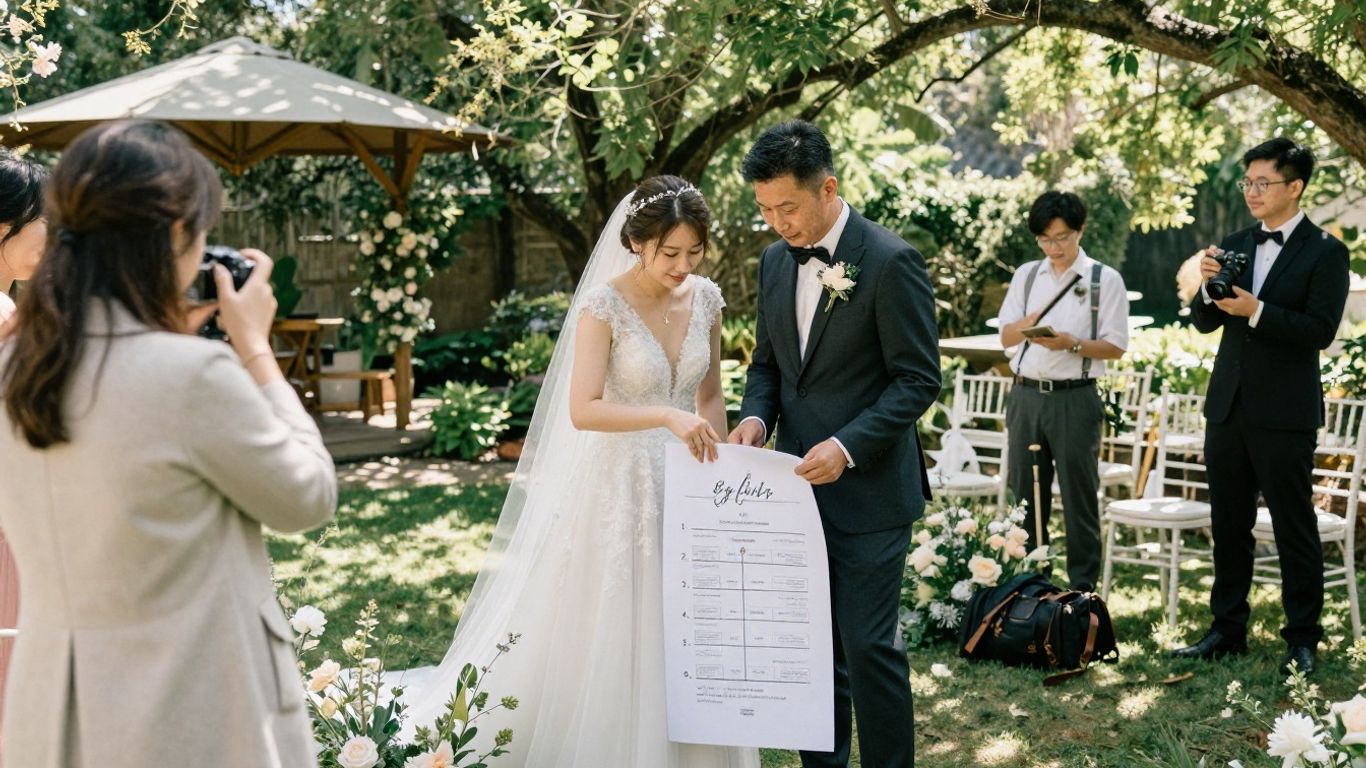
A timeline should help people make decisions quickly, not win a prize for decorative formatting. We create one shared version with the full detail and, where useful, a shorter version for phones and clipboards. Clear language matters more than clever design, especially when someone is reading it while carrying flowers or trying to find a car.
Share a clear version with the couple, vendors, and wedding party
We send the timeline to everyone whose work or movement affects the photography. The couple, celebrant, venue coordinator, hair and makeup team, transport provider, and wedding party may each need a slightly different view of the same day. Sharing it early gives people a chance to flag conflicts before they become a dramatic announcement in the foyer.
Include names, phone numbers, addresses, and travel details
The document should include the relevant contacts, preparation addresses, venue details, parking information, and planned routes. We check that phone numbers belong to people who will actually answer during the day. A precise address is far more helpful than “the old cottage near the main road”, however charming that sounds.
Mark responsibilities so no one asks the photographer to find the rings
Every task needs an owner. We identify who has the rings, who carries personal items, who gathers family members, who speaks with the venue, and who handles transport questions. This protects the photography time and stops the photographer becoming an all-purpose wedding detective.
Build a quick-reference version for phones and clipboards
The short version can show times, locations, contact names, and the next key transition. We keep the full notes elsewhere so the working page remains easy to scan. A useful quick reference answers the immediate question: where do we need to be, when, and who is responsible for getting us there?
Stress-test the schedule before the big day
A timeline can look perfectly sensible in a document and still fail once real people try to move through it. We test the transitions, ask awkward questions, and leave room for the answers. This is where photo timeline planning becomes less about arranging pretty moments and more about making the day kind to everyone involved.
Walk through the timeline with the venue coordinator
The coordinator can reveal practical details we may miss, such as a ceremony room that needs resetting, a service entrance that closes at a certain time, or a long route between the bridal suite and the garden. We walk through the day in order and ask what each transition looks like in real life. Their local knowledge is particularly useful for weather plans and guest movement.
Check whether every transition is genuinely achievable
We ask who is moving, what they are carrying, how far they are going, and whether they need time to compose themselves. A couple may move quickly, but a group of grandparents, attendants, and children will have a different pace. If a transition sounds tight when spoken aloud, we give it more time rather than hoping everyone develops wings.
Identify the three delays most likely to cause trouble
Usually the risks are visible: preparation running late, transport taking longer, and family members being difficult to gather. We note the likely effect of each delay and decide which parts of the plan can move without sacrificing the couple’s priorities. Naming the risks makes them manageable instead of mysteriously alarming.
Create a recovery plan when the day inevitably improvises
If the day falls behind, we protect the most meaningful photographs first and simplify the rest. We may shorten a location change, combine a few groupings, or move a portrait opportunity to a later window. The best recovery plan keeps the couple informed, preserves their choices, and remembers that a happy wedding is more important than a perfectly completed spreadsheet.
Frequently Asked Questions
How far in advance should we create a wedding photography timeline?
We can begin a rough version once the ceremony and reception times are confirmed, then refine it as locations, vendors, transport, and family details become clearer. A final review a few weeks before the wedding gives everyone time to spot conflicts.
How much time should we allow for family photographs?
The answer depends on the number of combinations, the size of the group, mobility needs, and whether people are already gathered. A short, named list with a photo wrangler is usually more useful than relying on a generic time estimate.
Should we do a first look before the ceremony?
A first look can create more time for portraits and reduce the number of photographs needed after the ceremony, but it is not essential. We choose based on the couple’s preferences, the day’s logistics, and how they want the ceremony moment to feel.
What happens if the ceremony runs late?
We protect the ceremony and adjust less important parts of the plan first. Portrait combinations can be simplified, locations reduced, or reception details photographed later. A calm conversation with the couple and coordinator helps everyone understand the new priorities.
How do we include travel time in the schedule?
We treat travel as a separate event and allow for parking, loading, walking, lifts, traffic, and delays. We check the route at the relevant time of day rather than relying only on an ideal journey estimate.
What should our wet-weather plan include?
The plan should name an indoor or covered location, explain how people will move there, and identify who will make the decision if conditions change. It is also worth considering how rain, wind, or heat may affect clothing, flowers, equipment, and guest comfort.
Who should receive the final timeline?
The couple, photographer, venue coordinator, celebrant, relevant vendors, transport provider, and wedding party should receive the information they need. We keep contact details current and make sure someone present on the day has the quick-reference version available.